

The Role You Play Defines the Team You Build
NBA Hall of Famer James Worthy believes extraordinary teams aren’t built on talent alone. They’re built by people who embrace their role, prepare relentlessly, and commit to something bigger than themselves.
by
Marielle Bobo
Global Head of Content Strategy
Transform

E very organization wants top talent. Companies compete for the brightest minds, the strongest resumes, and the highest performers. We celebrate individual achievement, reward star employees, and pour resources into recruitment.
Yet we’ve all watched teams stacked with extraordinary people fall apart anyway. And we’ve watched leaner organizations, with fewer superstars, quietly outperform. It comes down to this: talent alone doesn’t build great teams, commitment does.
For NBA Hall of Famer James Worthy, that’s the lesson that has shaped every stage of his career, from winning NCAA championships at the University of North Carolina to three NBA titles with the Los Angeles Lakers.
“When it comes to team building,” Worthy says, “it’s critical that teams have more than talent. Talent alone is not going to win you anything.” In today’s workplace where organizations are navigating rapid change, cross-functional collaboration, and increasingly complex challenges, his message lands harder than ever.
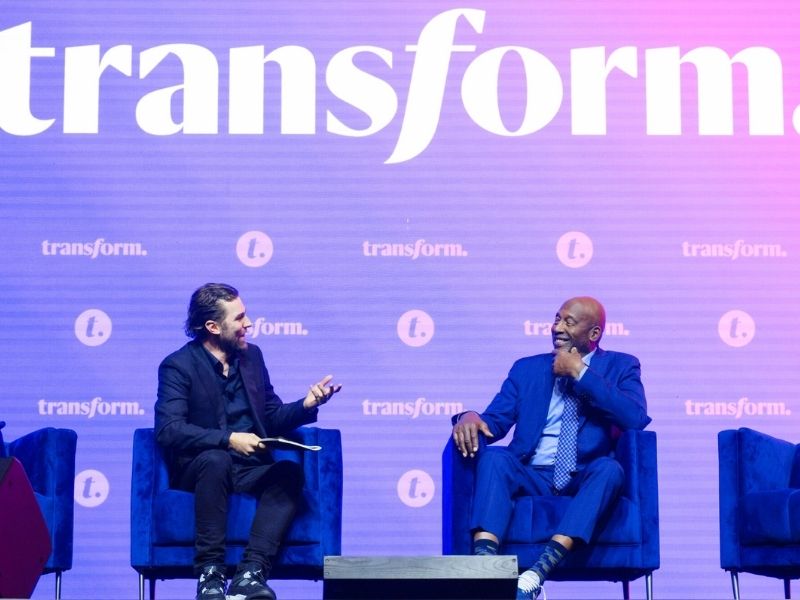
In his Transform 2026 fireside and the Behind the Keynote conversation that followed, Worthy got at something simple but easy to forget: the strongest teams are built by people who care more about winning together than about who gets the credit.
Watch: James Worthy reflects on the key themes of his recent Transform keynote
“ It’s critical that teams have more than talent. Talent alone is not going to win you anything.”

James Worthy on the myth of talent
Talent Gets You Noticed. Commitment Wins Championships.
Looking back on his career, Worthy doesn’t point first to championships or personal accolades. He reaches for a lesson he learned early. “I had to find mentors to help me understand the concept of the team,” he says. “Then I had to find, within the team concept, what my role was going to be. Once I committed to that role, I started to perfect it.”
It’s a subtle, but profound distinction. Though it’s easy to get caught up in finding the spotlight, great teammates focus on finding their role. Worthy has seen firsthand that every winning team runs on a mix of different strengths, all pointed at the same goal. “In my profession,” he explains, “everybody can’t shoot. Everybody can’t pass. Some people have to take charges. Some people have to get rebounds.”
Business isn’t so different. Not every leader is the visionary in the room, and the loudest voice isn’t always the most valuable one. Some people build relationships. Others solve problems. Some create order out of chaos. Some quietly make everyone around them better. High-performing organizations help people find the position they’re built to play, then show them how to thrive in it.
The Lesson That Changed Everything
One of Worthy’s earliest leadership lessons came from his mother. By eighth grade, he was a standout, playing for four different teams, convinced his future was already taking shape.
Then one report card changed everything: five Cs, one D. To James, that seemed good enough, but his mother disagreed. The next day, right before practice, his coach pulled him aside.
“I’ve been pleading with your mom for almost an hour,” the coach told him. “She says you’re done for the rest of the season.” Worthy was stunned. His mother had watched him come home from school, throw down his books, and head back outside every afternoon to play. Basketball had become his priority and school was an afterthought.
Her message was simple: you can do better than this. Looking back, Worthy calls it “a blessing in disguise.” It taught him that consistency matters more than raw talent, and that the discipline you build off the court is what shows up when you’re on it.
For today’s leaders, it’s a reminder that accountability is rooted in belief. The people who push us the hardest are often the ones who see our potential most clearly.
Join your peers, business leaders and an all-star line-up of speakers to shape the future of people + work.

April 12-14 | Fontainebleau Las Vegas

Adversity Is Often the Best Teacher
Another defining lesson arrived just as everything seemed to be going right. As a highly recruited freshman at North Carolina, Worthy broke his ankle.
At first, he feared it might be the end of his basketball career. But something shifted during recovery. Without practices, games, or road trips, he found himself spending time with law students, business students, and classmates who lived outside the world of athletics.
“I got back engaged in education,” he recalls, “because I didn’t know if I was going to make it or not.” What felt like a setback turned into a chance to rediscover a part of himself he’d set aside. It’s a lesson a lot of leaders overlook: your identity can’t rest on a single success. The most resilient people build more than one dimension of themselves, and prepare for uncertainty long before it arrives.
Great Teams Are Built Long Before Game Day
One of the biggest influences on Worthy’s career was legendary Lakers coach Pat Riley, whose philosophy came down to one idea: prepare 110 percent. “The extra ten percent,” he explains, “is when you have to deviate and do something different.”
That lesson still shapes how he approaches everything. “I check twice, and sometimes three times to make sure I’m prepared before I go into any situation.” Preparation isn’t glamorous. It doesn’t get applause. But championship teams aren’t built under bright lights; they’re built long before anyone is watching. The teams that navigate change most effectively are the ones preparing better, not faster.
“ I found mentors who helped me understand the concept of the team. Then I learned what my role was going to be, and I committed to perfecting it.”
James Worthy on discovering where he fit on the team
Great Leaders Are Built Through Mentorship
When people think about James Worthy’s legendary Lakers career, they often think about championship banners, the Showtime era, his trademark Statue of Liberty dunks, and swooping finger rolls. Few would guess that one of his greatest teachers wasn’t his coach. It was his teammate, Kareem Abdul-Jabbar.
“I never expected to receive that type of advice from a teammate,” Worthy recalls. “He became a tutor.” Worthy had arrived in Los Angeles just 15 hours shy of earning his college degree. While completing independent coursework on the road, Kareem noticed him studying history on the team bus. Without being asked, Kareem began quizzing him.
Dates. Historical events. Civil rights history. He helped Worthy finish his degree. But it didn’t stop there. Kareem introduced him to books, to jazz, to perspectives far beyond basketball. “He was more than a teammate,” Worthy says. “He was a great leader. A great teacher. None of it was about basketball. It was about life.”
And in today’s workplace, where many organizations invest in leadership development, mentorship may be one of the most underutilized competitive advantages.
Communication Wins Championships
Every team is a mix of personalities, strengths, ambitions, and working styles. The good ones thrive when everyone actually understands what everyone else brings to the table.
“You’re not going to like everyone that you work with,” Worthy says candidly. “You’re not going to be compatible with them. But they bring something to the table that’s going to help the team get to its ultimate goal.”
That doesn’t mean becoming best friends. “You don’t have to go out to dinner with them,” he laughs. “But you have to understand what they’re bringing to the table.” That’s why communication matters so much. “Communication is key,” Worthy says.
Too often, organizations mistake harmony for alignment. Friction is inevitable, but the healthiest teams are the ones willing to talk through it.
“You ‘re not going to like everyone you work with. But they bring something to the table that’s going to help the team get to its ultimate goal.”
James Worthy on working with people you don’t naturally click with
What This Means in Practice for People Leaders
James Worthy’s championship mindset offers practical lessons for anyone building a high-performing team.
Hire for both talent and commitment.
Skill may earn someone a seat at the table, but commitment determines whether they’ll be able to actually move things forward.
Help people find and embrace their role.
Not everyone needs to run the meeting or own the strategy. The strongest teams win because people understand exactly where they create the most value.
Build a culture of mentorship.
Some of the most important leadership lessons happen through everyday relationships. Encourage people to teach beyond the job description.
Prepare before the pressure hits.
The best organizations don’t wait for disruption to start building resilience. Preparation creates confidence when things inevitably change.
Reward communication over compatibility.
You don’t need everyone to think the same or even like one another. What matters is people who communicate honestly, solve problems together, and stay committed to the same goal.
Remember that accountability is an act of belief.
James’ mother had him benched because she believed he was capable of more. The best leaders understand that seeing someone’s potential comes with a responsibility to help them reach it.
A Championship Mindset
Every organization wants winning results: higher performance, sharper innovation, a stronger culture, better teams. But James Worthy believes those outcomes are earned long before the scoreboard tells the story. They’re built in preparation, accountability, mentorship, and communication.
And maybe most of all, they’re built when every person on the team commits to something bigger than themselves. “You have to commit to the philosophy,” Worthy says. “Then you have to really hone in on what your role is.”
Talent may open the door and titles may attract attention. But championships, whether in sports, business, or leadership, are won by teams full of people who prepare when nobody’s watching, who trust each other without keeping score, and who understand that greatness is about choosing, day after unglamorous day, to play your part like it matters. Because it does.
Take the James Worthy course on CodeSignal

CodeSignal and Transform are bringing conference conversations to life through interactive, hands-on learning experiences for leaders in the Human + AI era. Go beyond the stage with a practical framework for applying insights from James Worthy’s Transform session in this free course.
More Behind the Keynote Spotlights
Follow us for regular updates