


Welcome to Transform’s People-First Leader Spotlight Series, an exciting journey into the minds of innovative people leaders who are disrupting the now and next of work.
In each Q&A-style article, we’ll introduce you to people-first leaders like Paul E. Wolfe, who are redefining the boundaries of their industries with forward-thinking ideas and transformative approaches.
About Paul:
Human First Leadership Advocate championing the development of workplace cultures built on authentic connection, shared vulnerability, and purpose-led performance. Former HR Exec at prominent companies, including Indeed, Conde Nast, Match.com, and others.
Board member at PayScale and as an HR Venture Advisor for SemperVirens Venture Capital. Author of “Human Beings First – Practices for Empathetic, Expressive Leadership” (2023). One husband. Three dogs. New York.
Learn more and reach out at paulwolfe.com.
Leadership and Influence:
Transform: Please share the journey that led you to focus on people-first leadership.
Paul: My journey began with a simple realization: organizations don’t succeed because of systems or strategy alone—they thrive because people care, connect, and feel valued. Early in my HR career, I saw firsthand how empathy and real human connection fuel engagement, innovation, and meaning. Across every role, from individual contributor to CHRO, embracing “humans first” as a mantra transformed not just my results, but the impact I was able to have on individuals and teams.
Transform: Why did you choose to work in this industry?
Paul: I’ve always believed that work should be a place where people grow—not just professionally, but as human beings. HR gave me the platform to help shape cultures that support individual potential, belonging, and collective purpose. I’m energized by the challenge of improving work for everyone, every day.
Transform: What was your first job, and how did it shape your perspective on work?
Paul: My first job was stocking shelves at a local grocery store. It taught me that every role matters—and, perhaps more importantly, that how a manager treats you can dramatically impact your performance and how you feel about your work. That early experience shaped my conviction that leadership is about service and dignity, no matter your title.
Paul: How have your leadership methods evolved over the years?
Your Response: I used to think leadership was about having the answers. Over time, I realized it’s about asking the right questions, listening deeply, and creating space for others to shine. Today, I lead with more vulnerability and trust, focusing on unlocking others’ potential and showing up as my authentic self—even when that means admitting I don’t have every answer.

Vision and Impact:
Transform: What motivates you to prioritize people over processes?
Paul: Processes are important, but people bring them to life. When you prioritize people—their well-being, aspirations, and unique strengths—better results follow naturally. Nothing is more motivating to me than seeing someone grow into their potential and knowing I played even a small part in that journey.
Transform: Can you share a significant initiative you’ve led that focuses on enhancing employee well-being or engagement?
Paul: At Indeed, one of our most impactful initiatives was scaling wellbeing and flexible work programs at the height of the pandemic. We doubled down on transparent communication, listened deeply to employees’ needs, and quickly introduced support—from mental health resources to more flexible schedules—that put humanity before policy. Engagement and trust soared, even in the midst of uncertainty.
Strategies for Change:
Transform: How do you foster a culture of openness and innovation within your team or organization?
Paul: It starts with psychological safety—creating an environment where people feel safe to speak up, challenge norms, and bring new ideas forward without fear. I encourage curiosity, celebrate “failures” as learning moments, and model transparent communication as a leader.
Transform: What leadership lessons have you learned that are unique to managing people?
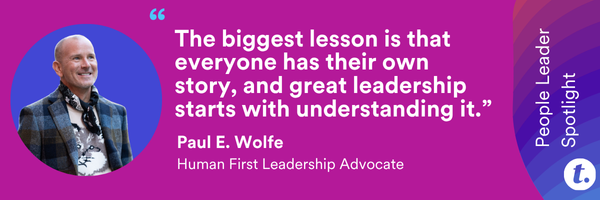
Paul: The biggest lesson is that everyone has their own story—and great leadership starts with understanding it. Managing people is about meeting them where they are, recognizing their humanity, and adapting my approach to help them thrive. No two individuals are the same, and one-size-fits-all leadership just doesn’t work.
Engagement and Influence:
Transform: How do you engage and inspire your team to adopt people-first practices?
Paul: I lead by example—demonstrating care, flexibility, and a willingness to go first in showing vulnerability or gratitude. I make recognition a daily practice, highlight stories of empathetic leadership, and invite team members to shape our ways of working together.
Transform: Can you describe a moment when you realized the true impact of your people-first approach?
Paul: One moment that stands out: an employee reached out years after I’d been their leader, sharing how a small act of empathy—taking time to support them during a tough personal moment—changed the trajectory of their career. It was a reminder that authentic connection and care can have ripple effects long beyond any single project or deliverable.
Looking Forward:
Transform: What future trends do you believe will further shape leadership and workplace dynamics?
Paul: Flexibility, purpose-driven work, and inclusion will continue to redefine how and why people engage. AI and technology will only amplify the need for human-centered leadership—empathy, creativity, and resilience can’t be automated. Leaders who prioritize adaptability and learning will be best positioned for what’s next.
Transform: What’s next on your agenda for fostering a more people-centered workplace?
Paul: I’m passionate about helping more organizations move from policy to practice—embedding empathy and belonging into daily routines, manager training, and cultural rituals. I’m also exploring ways to measure and scale the impact of human-first leadership, so we can show its value even more clearly.
Personal Reflections:
Transform: What is a specific project, initiative, or career highlight you are most proud of?
Paul: I’m especially proud of leading Indeed through rapid global growth—scaling from 1,000 to over 11,000 people while holding onto our values and building a culture where employees consistently felt seen and heard. The trust and kindness we built together were our true differentiators.
Transform: How have you changed as a leader over the years?
Paul: I’ve become more humble and more present. I lean into listening and learning, rather than trying to “drive” every answer. I recognize that my role isn’t to be the hero, but to create space for others to become theirs.
Transform: Who do you go to for advice and inspiration?
Paul: I learn from peers in HR and business, my personal mentors, and, perhaps most consistently, from listening to employees at every level. Their lived experiences and stories inspire and guide me every day.
Transform: How do you stay current on leadership and management trends?
Paul: I read voraciously—articles, books, research—attend conferences, and—most importantly—seek out conversations with leaders and practitioners who challenge my thinking. I’m always curious and open to learning something new.

Transform: How do you balance the demands of leading with personal wellbeing?
Paul: I set clear boundaries, prioritize time with my family and dogs, and make sure self-care is non-negotiable. I also remind myself that I can’t pour from an empty cup—if I’m not well, I can’t support others.
Transform: What is one piece of advice you would offer to future leaders aiming to prioritize people in their leadership style?
Paul: Lead with empathy. Get to know your people as human beings first. The results will follow—but only if your team knows you see and value them beyond their output.
Transform: How do you create work-life balance in your own life?
Paul: I focus on “work-life integration,” making time for what matters most outside work, and giving myself permission to unplug and be fully present. I structure my calendar with protected time for wellness, friends, and the things that recharge me.
Transform: What career advice would you give to your younger self?
Paul: Don’t be afraid to bring your whole self to work, and trust that vulnerability is a strength, not a weakness. The best outcomes—and relationships—happen when you lead openly and authentically.
Nicky: Trust yourself more, speak up even when it feels uncomfortable, and don’t wait for permission to lead. The things that make you different are actually your strengths… lean into them early.
See Paul speak on the Transform stage at Transform 2026! Secure your ticket now. And check out other insightful Transform Spotlights and thought leadership articles on the Transform Blog.